
Your vehicle’s engine is one of its most valuable and complex systems, and extending its lifespan starts long before warning lights appear. Daily driving habits, maintenance routines, climate conditions, and service quality all influence how well an engine performs over time. Preventive maintenance and professional inspections help identify small concerns before they become major repairs.
Drivers often underestimate how environmental conditions affect engine health. Heat, traffic congestion, repeated short trips, and delayed maintenance all increase wear on internal components. Consistent engine care helps maintain reliability, performance, and long-term drivability.
Stay Consistent with Oil Changes for the Vehicle’s Engine
Engine oil protects internal components by reducing friction and carrying heat away from moving parts.
Over time, oil loses effectiveness, and contamination can increase.
Routine oil service helps support:
- Proper lubrication
- Reduced engine wear
- Cleaner engine operation
- More stable engine temperatures
- Improved long-term performance
Using manufacturer-recommended oil and maintaining service intervals remains one of the most effective ways to protect Vehicle’s Engine.
Pay Attention to Warning Signs Early in Vehicle’s Engine
Minor symptoms can become larger engine issues if ignored.
Watch for signs such as:
Check Engine Light
Diagnostic systems often detect problems before performance changes become obvious.
Reduced Performance
Changes in acceleration or responsiveness deserve attention.
Unusual Engine Sounds in the Vehicle’s Engine
Knocking, ticking, or abnormal noises may indicate wear or mechanical concerns.
Rough Operation
Shaking or inconsistent engine behavior should be inspected.
Advanced diagnostics help identify the root cause instead of treating only visible symptoms.
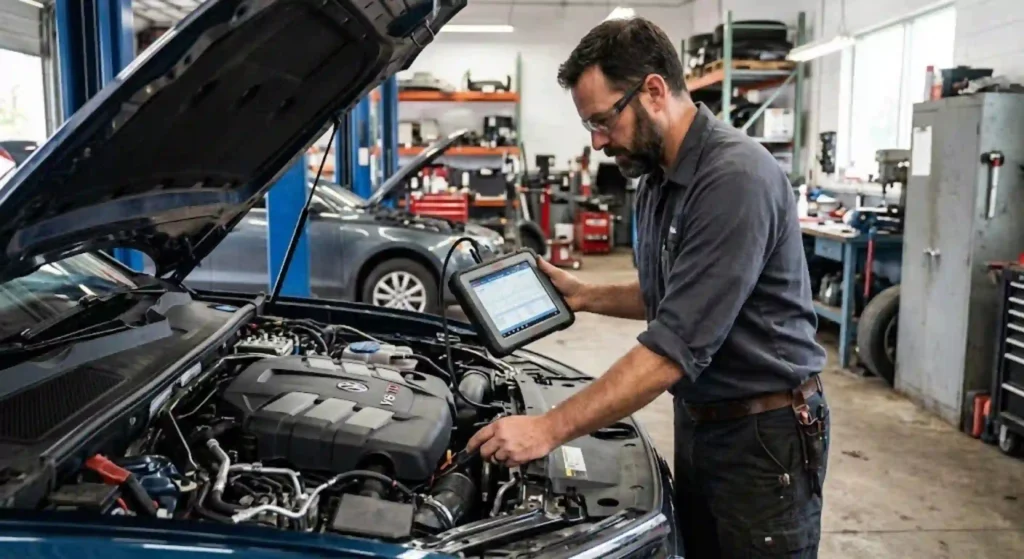
Job Story: Preventing Major Engine Repairs Through Maintenance
A vehicle owner noticed occasional hesitation and reduced engine smoothness during commuting but continued driving because the symptoms seemed minor.
During a professional inspection, technicians found maintenance-related issues affecting engine performance and identified opportunities to prevent additional wear.
After completing scheduled maintenance and targeted service recommendations, the vehicle returned to smoother operation and improved reliability.
This reflects a common pattern: small maintenance concerns often become more expensive when delayed. Professional diagnostics help create a long-term maintenance plan rather than reacting after failure occurs.
Protect Your Cooling System in the Vehicle’s Engine
Temperature control is critical for engine longevity.
Engine cooling systems help prevent overheating and reduce stress on internal components.
Preventive cooling system care may include:
Coolant Condition Monitoring
Fluid performance changes over time.
Radiator Inspection in Vehicle’s Engine
Ensures efficient heat transfer.
Hose and Component Checks
Helps identify wear before leaks develop.
Overheating remains one of the most common contributors to severe engine damage, especially during hotter driving conditions and heavy traffic.
Keep the Fuel System Clean
Efficient combustion supports smoother engine performance.
Fuel system maintenance may help with:
- Cleaner fuel delivery
- Improved throttle response
- Better engine consistency
- Reduced deposit buildup
Driving patterns that involve frequent stop-and-go traffic and shorter trips can contribute to fuel system deposits over time. Professional cleaning services help maintain proper Vehicle’s Engine operation.
Follow Scheduled Maintenance Instead of Waiting for Problems
Preventive maintenance is usually easier than major repairs.
A complete maintenance strategy may include:
Fluid Services
Supporting lubrication and temperature control.
Vehicle Inspections
Evaluating wear across major systems.
Component Monitoring
Tracking developing concerns before failure.
Diagnostic Testing
Identifying issues early.
Routine inspections create opportunities to address small concerns before they affect engine reliability.
Professional Advantage: Why Engine Care Is Not DIY
Modern engines rely on advanced electronics, sensors, cooling systems, and precise component timing.
Professional engine service provides:
- Advanced diagnostic equipment
- OEM or equivalent replacement standards
- System-level inspection
- Accurate maintenance planning
- Experienced repair procedures
Professional technicians evaluate the entire engine system rather than focusing only on visible symptoms.
FAQ
What helps an engine last longer?
Consistent maintenance, proper fluid service, early diagnostics, and cooling system care all contribute to longer engine life.
Does stop-and-go driving affect engine wear?
Yes. Frequent starts, traffic, and heat can increase stress on engine systems over time.
How often should I inspect my engine?
Follow manufacturer recommendations and schedule inspections whenever warning signs appear.
Can maintenance reduce major repairs?
Preventive maintenance helps identify issues earlier and may reduce the likelihood of severe engine damage.
Keep Your Engine Running Longer
Your engine works every time you drive; protecting it starts with routine maintenance and professional attention before problems grow.
Schedule an engine inspection, stay current on maintenance, and build a long-term care plan that supports performance and reliability.